Ahmedabad - 382430, Gujarat (India)

If you are scaling up from a prototype to 5,000 or 50,000 boards, you already know the nightmare. One wrong via, one slightly off impedance, or a delayed shipment can kill your product launch.
I have seen this happen more times than I can count in my 20+ years at Megabyte Circuit Systems. A brilliant hardware engineer chooses a PCB circuit board manufacturer based only on price. Three weeks later? They are staring at delamination, solder mask peeling, or failed electrical tests.
But here is the good news. You don’t need to learn this the hard way.
In this guide, I will walk you through exactly how to evaluate a PCB circuit board manufacturer for high-volume production. You will learn the technical red flags, the must-have certifications, and the exact questions to ask before sending your Gerber files.
Let’s fix your supply chain today.
Not every shop with a etching machine is ready for volume production. There is a huge gap between a small batch prototyping house and a high-volume PCB circuit board manufacturer.
A truly industry-ready manufacturer must have three things:
In my experience, if a vendor cannot show you their AOI logs or IPC training records, walk away. We have built our entire PCB manufacturing line around these three pillars because volume production has zero tolerance for “maybe it works.”
Quick Technical Summary:
An industry-ready PCB circuit board manufacturer must use AOI on every panel, offer 100% electrical testing, and comply with IPC-A-600. Never rely on visual inspection alone for high-volume orders.
Let me share the exact checklist I give to every industrial procurement manager who visits our factory in Ahmedabad.
Your single layer PCB or multilayer board is only as good as the laminate. Ask for material certificates (UL or IPC-4101). Also check how the manufacturer stores prepreg and copper-clad laminates. Improper humidity control = hidden reliability issues.
We store all our materials in climate-controlled zones, and we log every batch. If a problem appears after 10,000 pieces, we can trace it to the exact panel.
For high-speed designs, impedance matching is non-negotiable. Your PCB circuit board manufacturer must provide impedance test coupons and actual TDR (Time Domain Reflectometry) reports.
If they say “we can try,” that is a red flag. You need guaranteed 50Ω or 100Ω differential impedance.
High-volume means predictable lead times. A reliable PCB company in India will give you separate timelines for:
At Megabyte, we use a real-time PCB calculator so you can see lead times and pricing instantly. No hidden surprises.
Before running volume production, a good manufacturer will send you a detailed DFM (Design for Manufacturing) report. This includes:
If they only say “OK” without a report, they are not reviewing your files properly.
Quick Technical Summary:
For high-volume success, prioritize material traceability, impedance control, transparent lead times, and detailed DFM reports. These four factors prevent 90% of common production failures.
After reviewing over 2,000 vendor audits, I have seen the same red flags again and again.
Red Flag | Why It’s Dangerous |
No AOI machine on site | Defects will reach you, not caught in factory |
Refuses to share IPC test reports | Likely not meeting Class 2 or 3 standards |
Vague about laminate brand (e.g., “Taiwan material”) | Potential counterfeit or subgrade FR4 |
No E-test for volume orders | Opens and shorts will escape |
Requests full payment before shipment | Cash flow problems – risk of delayed delivery |
Let me be blunt. One of my clients ignored the “no AOI” red flag with a cheap PCB board manufacturer in India outside Gujarat. They received 5,000 boards with micro-shorts. Rework cost? ₹18 lakhs. Lost time? Two months.
Do not save 5% on unit cost to risk 200% in rework.
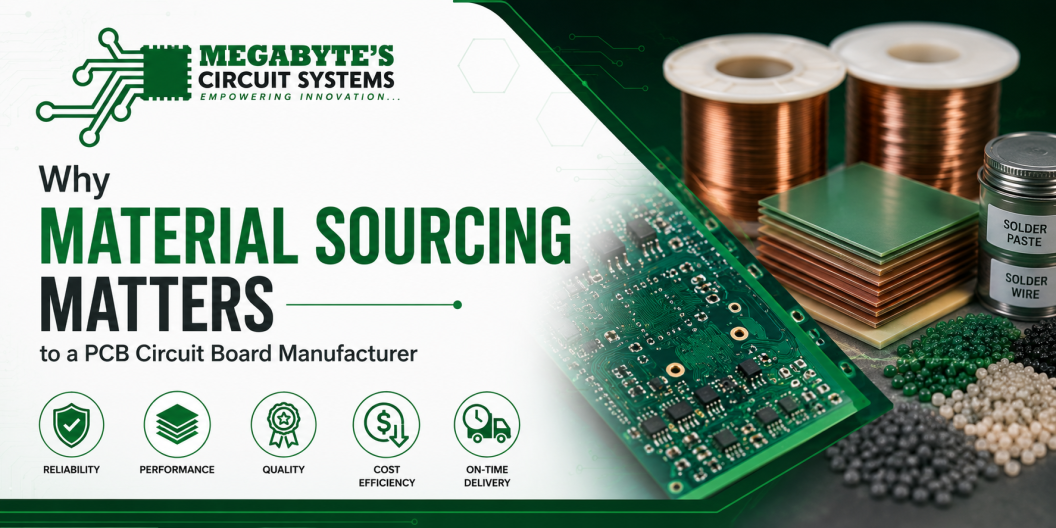
You might think all FR4 is the same. It is not.
Leading PCB board manufacturers in India source from approved vendors like:
Each has different Tg (glass transition temperature), CTE (coefficient of thermal expansion), and CAF resistance.
For example, if you need lead-free assembly (260°C peak), you must use a high-Tg material (170°C+). A standard 130°C Tg board will get damaged.
In our multilayer PCB production, we always confirm the material TG and CTE before ordering copper-clad laminates. We also share these specifications in your quote.
Quick Technical Summary:
Material selection directly impacts thermal reliability. For lead-free assembly or dense multilayer boards, always require high-Tg (170°C+) FR4 and ask for the laminate brand name before production.
You can avoid most volume production delays by following this DFM checklist. Share this with your design team before sending Gerber files to any PCB circuit board manufacturer.
I have created a free PCB developing services checklist for our clients. You can request it anytime.
Let me walk you through how a serious PCB circuit board manufacturer ensures quality.
Each laminate panel is checked for:
We follow IPC-A-600 (acceptability of printed boards) as our inspection standard. If a board fails, it does not leave our factory. Period.
Quick Technical Summary:
A reliable manufacturer uses IQC, in-process AOI, and 100% electrical testing. For high-volume orders, fixture testing is the gold standard. Always ask for IPC-A-600 compliance.
One question I hear every single week: “How can I reduce my PCB cost without lowering quality?”
Here is the honest answer from a PCB company in India that has quoted thousands of volume jobs.
Your single layer PCB or double layer PCB layout should maximize the standard panel size (usually 18″ x 24″ or 21″ x 24″). Awkward board shapes waste material.
We use automated panel optimization software. You can experiment with the PCB calculator on our website to see panel utilization percentage.
Avoid exotic material combinations. Standard FR4 with 1 oz copper is the most economical. Mixed copper weights (e.g., 0.5 oz inner, 2 oz outer) increase lamination cycles and cost.
If you have two different small boards, consider panelizing them together. This saves tooling costs and setup time.
Emergency 3-day turns cost 3–5x more. For volume, plan 2–3 weeks standard lead time.
A practical tip: Order 15–20% extra panels. Scrap happens. It is cheaper than a second rush order.
I want to share a real case.
A Pune-based IoT company was struggling with intermittent failures in their field devices. They had chosen the cheapest PCB board manufacturer in India they could find.
After reviewing their boards, we found:
We requoted the job with proper specifications:
The unit cost increased by 18%. But field failure rate dropped by 94%.
That extra 18% saved them from service calls, customer returns, and brand damage. Smart procurement is not about lowest price. It is about lowest total cost of ownership.
Quick Technical Summary:
Low initial price often hides poor quality and high failure rates. Focus on total cost of ownership (TCO). A slightly higher unit cost with reliable testing saves money in the long run.
Most reliable PCB circuit board manufacturers start volume MOQ at 500–1,000 pieces. At Megabyte, we accept smaller volumes too, but unit price drops significantly above 2,000 pieces.
Upload your RS-274X Gerber files, drill file, and readme directly on our quote page. We usually respond within 24 hours with a DFM report and pricing.
Yes, absolutely. Many PCB board manufacturers in India including us offer impedance control for 50Ω single-ended and 90Ω/100Ω differential pairs. We provide TDR reports with every batch.
Standard lead time is 10–12 working days. For single layer PCB, 7–9 days. For multilayer PCB (6+ layers), 15–18 days. Expedited options are available.
Ask for their latest IPC training certificates and a sample IPC-A-600 inspection report. Serious manufacturers proudly share these.
Indian manufacturers offer competitive pricing, faster communication in English, no geopolitical shipping risks, and often shorter delivery times to domestic customers. Plus, you can visit the factory easily.
Choosing the right PCB circuit board manufacturer is not complicated. But it does require the right questions and standards.
To recap:
At Megabyte Circuit Systems (Ahmedabad, Gujarat), we have been doing exactly this for over two decades. We manufacture single layer PCB, double layer PCB, and multilayer PCB for hundreds of Indian hardware startups, industrial OEMs, and IoT companies.
Whether you need a quick-turn prototype or a high-volume production run, our team is ready to help.
Have a specific requirement? Just reply to this email or call our technical team. I personally review all complex DFM queries.
Let’s build reliable hardware together.
Senior Consultant, Megabyte Circuit Systems
20+ years in PCB fabrication | IPC-certified | Based in Ahmedabad, India
C/10, Yogeshwar Estate, B/H Madhuram Estate, Nr. Vishala Estate, Sardar Patel Ring Rd, Odhav, Ahmedabad, Gujarat, Ahmedabad - 382430, Gujarat (India)
Copyright © 2025. Megabytes Circuit Systems All rights reserved.
Powered by FrogMEE Tech